
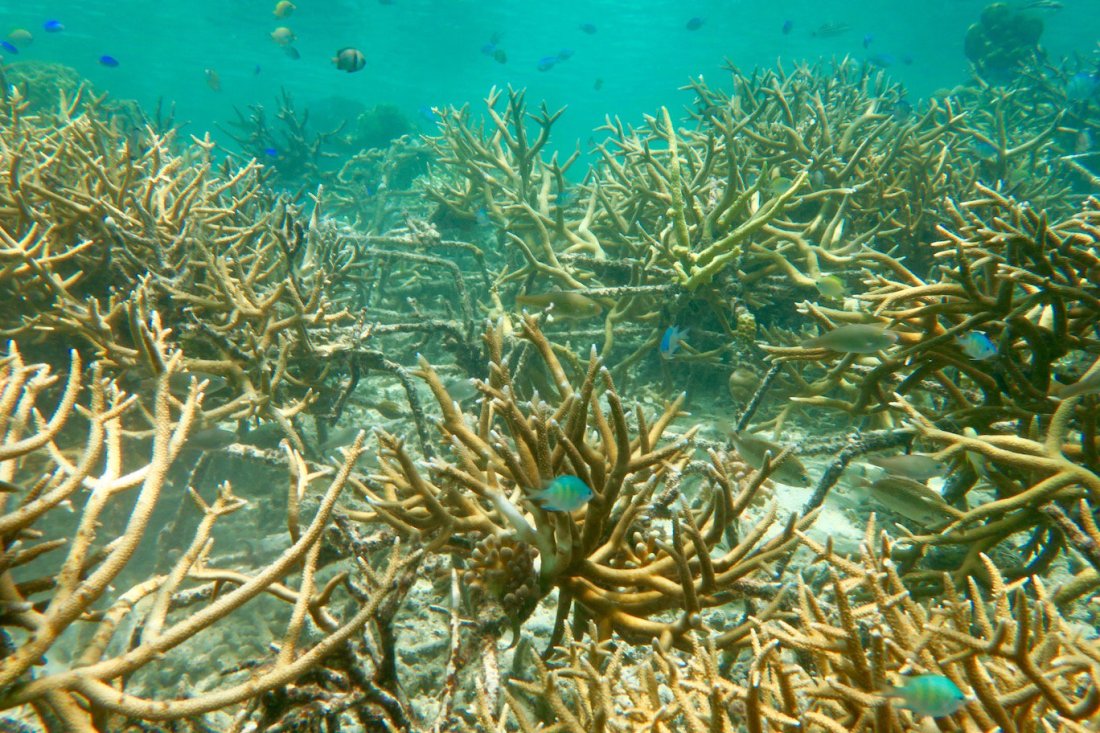
The science behind coral reef decline has been well documented for decades. It’s not just climate change and coral bleaching – it’s blast fishing, coral mining, pollution and destructive human activities that are bringing one of the world’s most important ecosystems to a tragic end.
I’ve been diving for close to a decade, both up in the northeast atlantic and down in the Caribbean – I think a lot of us who have grown up loving the ocean and experiencing what it’s like to dive beneath it have moved past anger. Now it’s just sad. We can show pictures, videos, sea creatures suffering from plastic pollution, corals fluorescing in their final stages of life, almost as if they’re begging to be noticed, we can show the ghostly skeletons that are left behind when they die, and the baron seascape that used to be teaming with life, but it seems that it all equates to a fleeting segment on nightly news. People say, “Oh that’s terrible,” and they go on eating their dinners. And for a long time it’s seemed as if we were on to a waiting game, waiting for people to wake up to a desolate ocean, finally realizing, a moment too late, well we f-k’d up.
Finally, though, we might have saved ourselves from that sullen sunrise.
A study published in the September issue of Restoration Ecology detailed a new method of restoring coral reefs that has yielded some of the most exciting results we have ever seen. The problem has always been that we lack a cost-effective method of restoring significant swaths of coral reef. However, scientists involved in this project installed 11,000 small, hexagonal structures they call “spiders” across 5 acres in the center of Indonesia’s coral triangle, the most biodiverse ecosystem in the entire ocean. Between these structures they placed fragments of live coral, hoping they’ll bridge the gap between each other and create a new coral seascape.
Between 2013 and 2015, live coral coverage on these structures increased from less than 10 percent to over 60 percent.


This success couldn’t come a moment too soon – of all our mounting environmental problems left unsolved, saving our reefs has the potential to positively effect more lives than almost any other.
The reefs not only support the largest scale of biodiversity in the ocean, but they support the livelihoods of hundereds of millions of people – coastal villages, fisheries, tourism, and communities that rely on the reefs for storm surge and flooding protection. Money has always been the greatest corruptor of humankind, stripping away morals and empathy. People believe…certain people that is, believe that it won’t be them who kill an entire ecosystem, and that the money made now can help people, but they ignore the unfathomable consequences of their actions.
Part of me believes that it’s becuase most people can’t see it with their own eyes. They’ve never been 60 feet beneath the surface. They’ve never floated weightlessly, feeling wrapped in that turquoise blanket, being gently rocked by the ocean’s arms. Suspended in that moment, you can look up and see a show of sunlight shimmering off the surface, something even more dazzling in the rain. But it’s only the opening act. You can’t believe the sights could get more stunning until you look beneath you – and like an oil painting on a canvas that stretches farther than your imagination, the colors reach out a grab you, and it makes you forget every sunset you’ve ever seen. I’m sad in thinking that so many people can sit on a shore, or a boat, and see only an expanse of nothing until it disappears beyond the horizon, never knowing the cliffs and corridors of color and life that are right beneath them.
There are two moments i’ve had beneath the surface that I think of when I write this.
One was diving at Grand Cayman in the Caribbean – I was headed towards a shipwreck, the Kittewake, a ship sunken purposefully so as to promote coral growth and provide a habitat for organisms to thrive. I swam through a canyon, 70 feet down, coral walls on each side, until I came to the clearing. The ship lay there, partially buried, its bow angled up, and nothing but white sand and clear water around it. As I came around the bow to the other side I saw the most incredible eagle ray dancing in the water column – it’s wings slowly fluttering as it flashed that brilliant spotted back.
The other moment was much different, and probably the only time I’ve ever wished for the dark. It was a night dive in St. Lucia, another island in the Caribbean. I came upon a patch of beautiful coral fluorescing in the darkness. I turned my flashlight off, I didn’t need it, and when I did something stunning occurred – I realized it wasn’t just the coral that fluoresced. With every stroke of my fins, the water surrounding them started sparkling with microscopic fluorescing phytoplankton, like little fireflies following me with every kick. It turns out it’s a communal signaling mechanism, and these organisms will fluoresce when they sense a disturbance in the water around them as a way of warning others.
These moments showed me that theres beauty from the smallest forms of life to the most complex.
It confuses me – People are entranced by space, perhaps becuase it’s an environment that’s so alien to our own. We haven’t even discovered life beyond our planet, yet we love to fantasize in movies and TV. What we forget is that we have an equally alien environment right here on our own planet, teeming with life so unlike humans that it might as well be from another galaxy, yet somehow it’s less interesting.
I’ve only scratched the surface of the beauty to be seen underwater, and without coral reefs so much of that beauty would be gone. I’m not saying you have to dive, i’m just tired of reefs being out of sight, and out of mind – I just want people to understand that there is an entire world beneath them, and it’s worth saving.
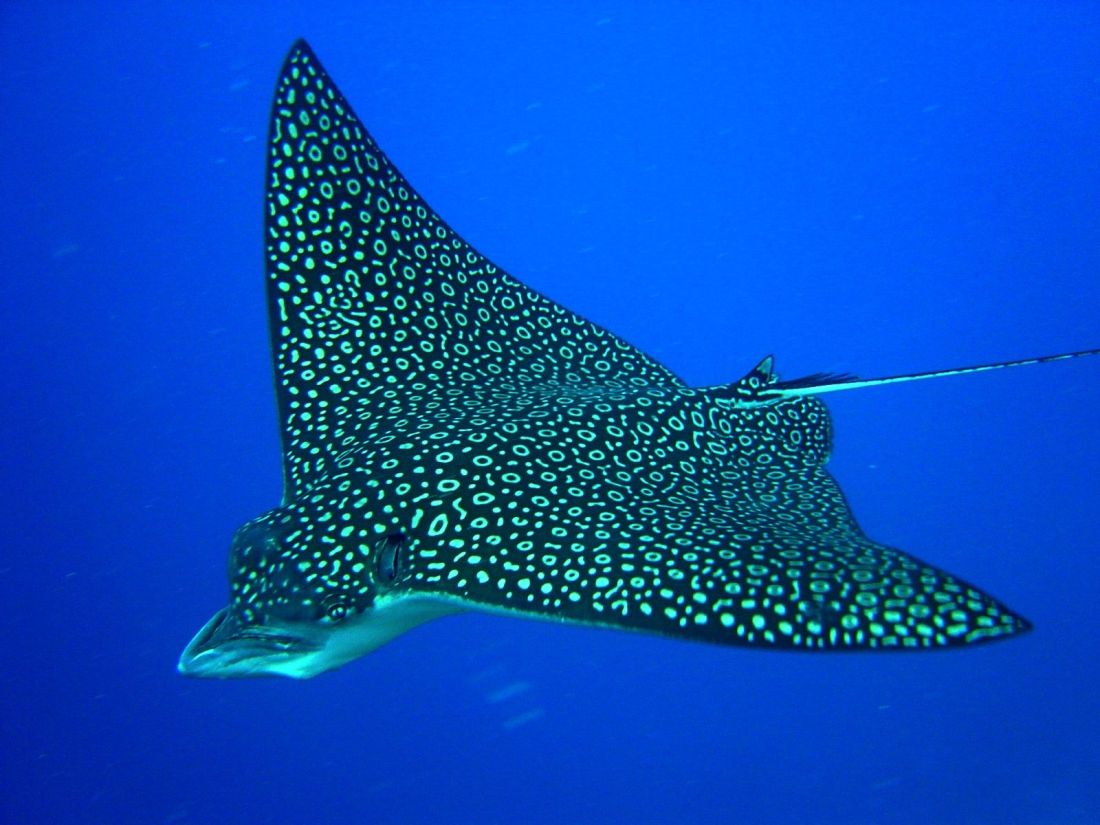
(Spotted Eagle Ray)
 EcoTech