

For a long time the world has recognized a need to shift towards alternative forms of energy, but in order to do that we need something that can be invested in for the long term, and most importantly, something that is cheap to produce.
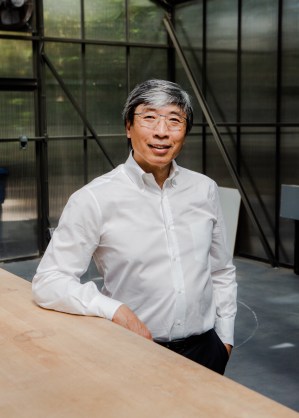
Dr. Patrick Soon-Shiong, CEO of biotech company NantEnergy, has brought us much closer to that goal with the announcement of a rechargeable zinc-air battery that allegedly stores energy at a far cheaper cost than its lithium-ion counterpart.
Getting the carbon problem under control is going to be our nations, and the worlds, most crucial environmental problem for the next decade.
Lithium-ion batteries were a brilliant move to store energy from solar panels, wind turbines, and other forms of alternative energy – energy storage being a crucial component of marketing new energy technology. However they use scarce minerals, are vulnerable to fires and explosions, and are costly to produce – not something to place the fate of our planet in.
Dr. Soon-Shiong’s new battery produces energy by taking Zinc-Oxide and separating the compound into its component parts.
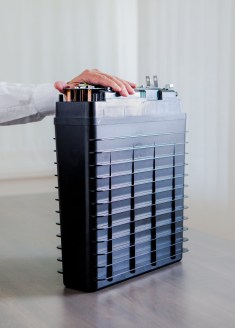
Many in the solar energy field see $100/kilowatt-hour as a milestone benchmark that, if achieved, could transform an electric grid into a carbon-free system. This new zinc battery has achieved this benchmark, which is what takes this technology from the realm of being a distant, possible option in the future, to reality. As a comparison, its lithium-ion counterpart comes in around $300 – $400/kilowatt-hour range.
Most exciting, perhaps, is the possibility to combine these new battery units with solar arrays in order to create a micro-grid system capable of powering an entire village, or even something larger. Presently, the technology has been implemented in 110 villages in 9 countries across Asia and Africa – powering villages that previously relied on generators or lacked electricity all together.
NantEnergy revealed this new battery hot on the heels of California’s legislature implementing a plan for the state to be 100 percent Carbon-free by 2045. Bernadette Del Chiaro, director of the California Solar and Storage Association, said, “I cannot claim to be in absolute certainty that this is everything they say it is, but it’s exciting,” going on to admit, “California is obviously in need of that kind of breakthrough.”
 EcoTech