
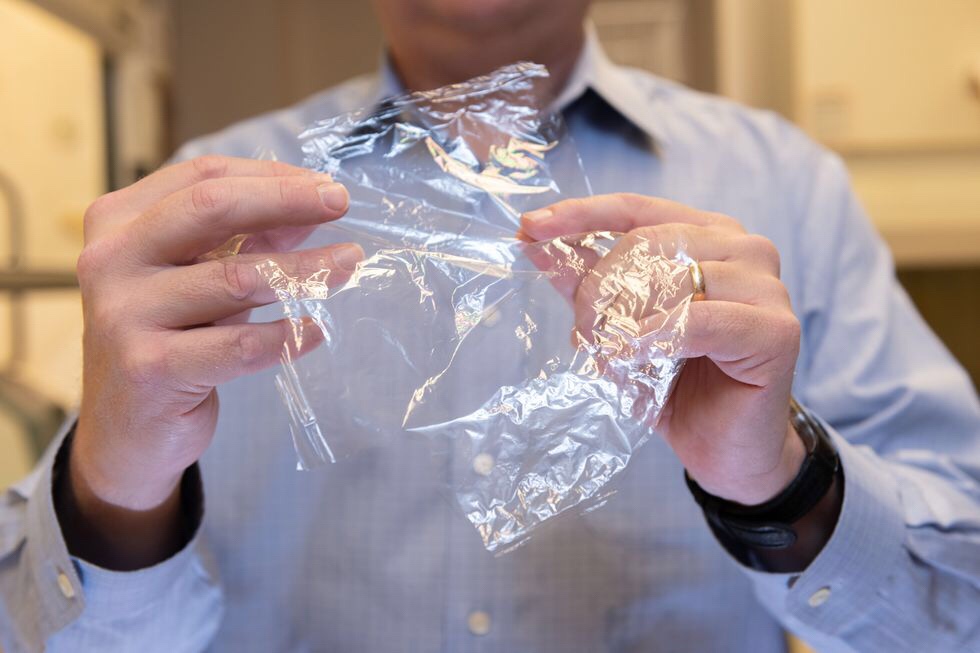
Our earth and it’s oceans have endured over a hundred years of harmful plastic pollution, and at last researchers from the Georgia Institute of Technology can show mother nature the light at the end of the tunnel.
Since its inception back in 1907, plastic has been heavily relied upon across the globe for its durability, it’s wide range of uses, and of course, because of its cheap production cost.
The problem being, when the plastic has served it’s purpose it winds up in the trash, and more often than not, the ocean.
These researchers hope to make their mark on history by creating a marketable substitute – one that’s much more green-friendly.
Plastic, or PET (polyethylene terephthalate), consists of tiny, woven fibers, and they produce three distinct qualities. It’s clear, people know what they’re getting inside the container, it blocks oxygen keeping food fresh, and it’s cheap to make.
To replace it, scientists have honed in on two special materials – cellulose fibers and chitin (found in crab and other animal shells). These are among the strongest fibers existing in nature.
One researcher on the team, J. Carson Meredith, explained how their “new plastic” is not only clear, but showed a “67 percent reduction in Oxygen permeability”. Meaning food will last much longer then in conventional plastic.
However, chitin is just not easy to produce in large quantities, and therefor money still stands in the way.
The negative effects of plastic are immeasurable. The main harm comes from fish, turtles, and other organisms consuming plastic material, which can damage internal organs, and kill these creatures.
According to reports by the Center for Biologial Diversity, the weight of all plastic is expected to surpass the weight of all fish by the year 2050, just 32 years from now.
Studies show that fish in the North Pacific alone ingest anywhere from 12,000 to 24,000 tons of plastic per year, that roughly a quarter of the fish at market in California had guts containing plastic material, that hundreds of thousands of seabirds die annually due to plastic ingestion, with estimates showing around 60 percent of all seabird species having eaten pieces of plastic, and the expectation is for that figure to rise to 99 percent by 2050.
Critically endangered species are having their reproduction effected by plastic pollution on beaches.
These researchers have checked two of the three necessary boxes to replace plastic as we know it. To check that third box will require the discovery of a revolutionary new material, chemical synthesis, or government support to bring costs down.
 EcoTech